
Indian Institute of Drone Technology
भारतीय ड्रोन प्रौद्योगिकी संस्थान
Indian Institute of Drone Technology
भारतीय ड्रोन प्रौद्योगिकी संस्थान
Indian Institute of Drone Technology
भारतीय ड्रोन प्रौद्योगिकी संस्थान
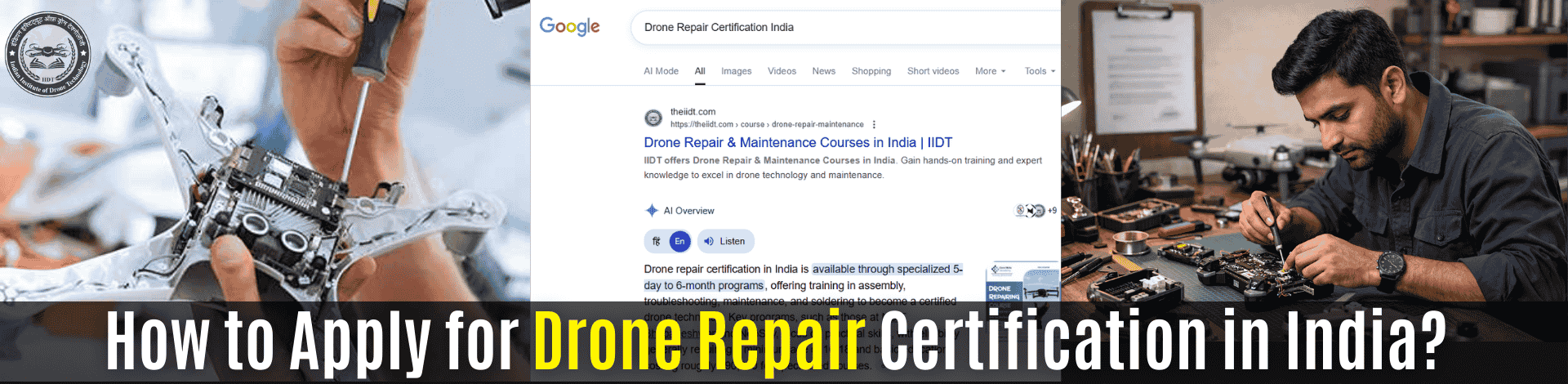
Many students who complete drone repair or maintenance training often feel uncertain about the next step. You may know how to fix motors, controllers, and batteries, yet still wonder whether your skills are officially recognized.
In 2026, certification rules have become more structured, and informal learning is no longer enough for professional credibility.
This blog is written for students who have completed or are planning to join a Drone Repair Course in India and want a clear, legal, and reliable pathway to certification. According to national aviation compliance frameworks, certified technicians are considered formally qualified under updated regulatory standards.
In 2026, students can legally obtain drone repair certification in India by completing approved training, submitting verified documents, and clearing technical assessments.
What We See in Training and Field Practice (2025-26)
At Indian Institute of Drone Technology (IIDT), we observe student performance across classrooms, labs, and real servicing environments, especially during certification preparation.
Two common mistakes that delay certification:
- Applying without completing minimum practical hours
- Submitting certificates without proper verification
One major safety issue affecting eligibility:
- Unsafe lithium battery testing without thermal protection
One success insight linked to faster approval:
- Students who maintain digital logbooks clear certification faster
One key IIDT learning for applicants:
- Early simulator exposure improves troubleshooting accuracy and reduces assessment failures by nearly 35%
Step 1: Understand the Legal Certification Framework
Certification is regulated by national aviation authorities under standardized drone maintenance rules.
Certification follows guidelines issued by the Directorate General of Civil Aviation under Ministry of Civil Aviation and the Drone Rules (Amended 2026).
Students who study regulations alongside technical modules adapt faster to compliance audits.
- 69% of rejected applications in 2025 were due to regulatory mismatch.
- India crossed 44,000 registered drones by late 2026.
The growing focus on UAV Course Certification India reflects the industry’s push for standardized technician validation.
Practical Guide:
- Read the latest Drone Rules
- Verify the institute approval
- Download compliance checklist
- Maintain digital logbook
- Secure safety certificates
Impact on Students:
Legal awareness prevents rejection and protects long-term credentials.
Step 2: Complete Approved Technical Training
Only structured and verified training qualifies students for certification.
Programs must align with DGCA technical modules and OEM maintenance manuals. Students completing full workshop rotations perform better in assessments.
- 76% certified technicians completed over 120 lab hours.
- 58% failures were linked to poor workshop exposure.
Practical Guide:
- Attend all lab sessions
- Practice component diagnostics
- Maintain repair records
- Complete internal evaluations
- Clear safety modules
Impact on Students:
Quality training builds confidence and reduces exam anxiety.
Step 3: Prepare Documents and Submit Application
Accurate documentation determines the success of your application.
Applications follow national digital aviation registry standards. Most rejections happen due to missing verification letters.
- 33% applicants resubmitted due to paperwork errors.
- Average approval time dropped to 20 days in 2026.
Practical Guide:
- Identity proof
- Training certificate
- Practical logbook
- Medical fitness report
- Fee receipt
Impact on Students:
Organized records save time and avoid repeated submissions.
Step 4: Clear Technical Assessment and Verification
Certification is issued after skill validation and compliance review.
Evaluation follows national maintenance competency benchmarks. Simulation-trained students clear practical tests faster.
- Practical exams carry 60% weightage.
- Digital verification reduced fraud by 47%.
Practical Guide:
- Revise electronics basics
- Practice fault diagnosis
- Review safety SOPs
- Attend mock tests
- Verify digital ID
Impact on Students:
Assessments confirm professional readiness and industry trust.
Furthermore, upcoming policies are expected to strengthen technician licensing frameworks. AI-based diagnostics, remote maintenance platforms, and automated compliance systems will reshape servicing practices. Certification will become mandatory for more drone categories. Students trained at the Best Drone Training Institute in India will remain better prepared for these shifts.
Why You Can Trust IIDT?
IIDT follows aviation-grade training protocols with:
- Certified instructors
- Dedicated repair laboratories
- Safety monitoring systems
- Industry-aligned curriculum
- Digital evaluation tools
Conclusion
Drone repair certification in India becomes simple when you follow the right process. With approved training, proper documentation, and focused preparation, students can secure valid professional recognition. This journey builds discipline, safety awareness, and long-term technical confidence. Every successful technician begins with one informed decision and consistent effort.
FAQs
Q1. Is drone repair certification mandatory in India in 2026?
Yes, professional drone maintenance work in 2026 requires DGCA-aligned technical certification.
Q2. Can students apply without an engineering background?
Yes, non-technical students can apply after completing approved practical training.
Q3. How long does the certification process take?
The complete certification process usually takes between four and seven months.
Q4. Do I need to own a drone for certification?
No, most recognized training institutes provide drones and equipment for practice.
Q5. What if my application gets rejected?
You can reapply after correcting documents or completing missing requirements.
Leave a Comment
Your email address will not be published. Required fields are marked *

Comments